
'The bull market cycle ran for five years. It's the end of that cycle.' 'The next cycle is a down cycle, and in that down cycle, you will see the Sensex falling from their highs of around 68,000 to maybe 40,000-50,000 at the bottom of the cycle.'
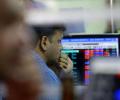
From the 30 Sensex pack, Mahindra & Mahindra, State Bank of India, Power Grid, Tata Steel, IndusInd Bank, Tata Motors, Larsen & Toubro, NTPC, Bajaj Finance and Reliance were among the biggest laggards.

From the Sensex pack, Reliance Industries, Bajaj Finserv, HDFC Bank, Adani Ports, Maruti Suzuki India, Axis Bank, Hindustan Unilever, Sun Pharmaceuticals and Asian Paints were among the laggards. Reliance Industries fell the most by 2.38 per cent to close at Rs 1,171.10 apiece.

Tata Steel, Bajaj Finance, Mahindra & Mahindra, JSW Steel, NTPC, Adani Ports, Bajaj Finserv and Larsen & Toubro were also among the laggards. However, Power Grid, HCL Technologies, Infosys, Tech Mahindra, Tata Consultancy Services and ICICI Bank were among the gainers.

Fundraising by Indian companies through equity and debt reached an all-time high in the financial year 2024-25 (FY25), according to data collated by primedatabase.com. Fundraising through debt stood at Rs 11.1 trillion in FY25, including contributions from InvITs (infrastructure investment trusts) and REITs (real estate investment trusts).

From the 30-share Sensex blue-chip pack, Tata Steel, Zomato, Larsen & Toubro, Tata Motors, Adani Ports, Tata Consultancy Services, HDFC Bank and NTPC were the major laggards. Nestle, Hindustan Unilever, Mahindra & Mahindra, Kotak Mahindra Bank, Asian Paints and Bharti Airtel were among the gainers.

The number of mergers and acquisitions (M&As) in August that involved private equity (PE) funds was the lowest in nearly three years. There were 26 such deals last month, according to data from tracker Refinitiv (part of London Stock Exchange Group). The last time monthly deal numbers were so low in recent times was January 2021 when Covid cases were picking up during the second wave of the pandemic.

Many retail investors, who are experiencing their first bear market, are shocked at the erosion in the value of their mutual fund (MF) portfolios. The pain is especially acute for those who had taken excessive exposure to sector/thematic and small-cap funds. Even international diversification has failed to stanch the bleed in this downturn.

Volatility might continue as the Chinese market is expected to open sharply lower, following a long break

India and the US are expected to have smooth trade negotiations after US President Donald Trump and Indian Prime Minister Narendra Modi had a productive meeting during Modi's visit to the White House last month, Stephen A Schwarzman, chairman, chief executive officer, and co-founder of one of the world's largest alternative investment firms, Blackstone Group, said in Mumbai on Wednesday.

Global investors have been cautious this year to put money into Indian real estate, as private equity inflow is down 44 per cent till December 12 to $3 billion compared to the entire previous year, according to Knight Frank. Real estate consultant Knight Frank India on Thursday released its data showing that the Indian real estate market received $3,024 million in PE investments from 23 deals between January 1 and December 12 this year, as against $5,357 million recorded in 2022.

The evolution of the PE market against the backdrop of the strong growth in the economy should translate into strong returns for investors.

Geopolitical events, macroeconomic data and quarterly earnings of corporates would guide the stock market in a holiday-shortened week ahead, analysts said. Stock markets will remain closed on Wednesday for Ram Navami. "This week promises to be crucial for the market as fresh worries about a potential conflict between Iran and Israel emerge.

From the Sensex pack, Asian Paints, NTPC, Reliance Industries, Tata Steel, Bajaj Finserv, Hindustan Unilever, Sun Pharmaceuticals, Adani Ports & SEZ, Axis Bank, Tata Consultancy Services, Titan and Bajaj Finance were the major gainers. Tech Mahindra, Kotak Mahindra Bank, Zomato, Tata Motors, and IndusInd Bank were the laggards.

'Starting an SIP now and continuing with it is likely to translate into high returns over the long term.'

The rally in Indian mid-and smallcap indices thus far in calendar year 2024 (CY24) has been the best in class across the world, eclipsing the global FTSE benchmarks, and also out running peers from other leading world stock markets. This is despite the correction in the mid-and smallcap segments back home seen in the last few days, triggered by valuation concerns, geopolitical developments amid nervousness ahead of the July - September 2024 (Q2-FY25) corporate results season.

Ahmedabad-based Nirma group and leading private equity firms have joined the race to acquire BSE-listed Glenmark Life Sciences. The acquisition by chemicals-to-cement major Nirma, if successful, would be a major boost for the health-care segment of the group, on the lines of its successful entry into the cement sector following its purchase of Lafarge India's assets for about Rs 9,400 crore in July 2016. It later followed up by buying Emami cement assets for Rs 5,500 crore in February 2020.

Investors lost Rs 24.69 lakh crore in market valuation in the last four days of severe drubbing in the equity market. Spike in global crude prices, unabated foreign fund outflows, a strong US jobs data diminishing early rate cut expectations, and the rupee logging its steepest single-day fall in nearly two years dampened investors' sentiment.

High frequency indicators, like vehicles sales, air traffic, steel consumption and GST E-way bills, point towards a sequential pickup in momentum of economic activity during the second half of the fiscal 2024-25 and sustain moving forward, RBI Bulletin said on Wednesday. However, a strong dollar, driven by US economic resilience and trade policy pivots, could exacerbate capital outflows from emerging economies, push risk premiums higher, and intensify external vulnerabilities, said an article on 'State of the Economy' published in RBI's February bulletin.

Global capability centres (GCCs) remained one of the major drivers of this huge spurt in demand for office spaces.

Despite volume growth in the export segment and strong demand in the domestic market, pricing uptick is eluding Indian agrochemical companies.

Investors became richer by nearly Rs 8 lakh crore on Wednesday as benchmark BSE Sensex surged by 740 points amid value buying in utilities and power shares and a strong trend in global markets. The 30-share BSE Sensex surged by 740.30 points or 1.01 per cent to close at 73,730.23.

The sharp pullback in mid and smallcap stocks signals a cooling-off period in segments that previously attracted considerable investor interest.

Largecap companies are generally less vulnerable to economic slowdowns than their mid- and smallcap counterparts.
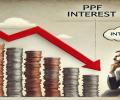
The answer depends on your financial goals and risk appetite, says Certified Financial Planner Ramalingam Kalirajan, and explains why.

From the 30 Sensex firms, Tata Consultancy Services and HCL Technologies dropped over 3 per cent each. Infosys, Tech Mahindra, Sun Pharma and Tata Motors were the other major laggards. Bajaj Finance, Bajaj Finserv, Nestle, HDFC Bank, ICICI Bank and State Bank of India were among the biggest gainers.

Hong Kong has regained its spot as the world's fourth-largest market following a broad market rout in Indian equities. Currently, the Chinese territory's market capitalisation stands at $4.9 trillion versus India's $4.75 trillion, according to data compiled by Bloomberg. In January, the domestic equity markets' market capitalisation had surpassed that of Hong Kong following a spectacular rally in the small- and midcap stocks.

Expenditure on new projects slowed down for the second quarter in a row amid an uncertain global environment and higher borrowing costs. There were new projects worth a cumulative Rs 3.26 trillion in the July-September period, according to data provided by project tracker Centre for Monitoring Indian Economy (CMIE). This figure is much less than Rs 4.39 trillion in the June quarter (Q1FY23) and Rs 8.46 trillion in the March quarter (Q4FY22).

The rupee tumbled 3 per cent against the US dollar in 2024 as concerns over slower economic growth and a stronger greenback in global markets weighed, but it was among the least volatile currencies in the world and the headwinds may be less intense in the coming year.

Finally, some good news for the Indian startup ecosystem. After four consecutive half-year periods of declining funding since 2022, the first half (H1) of 2024 has shown an upward trend compared to the second half (H2) of 2023. According to the India Tech Semi-Annual Funding Report H1 2024 by Tracxn, Indian technology (tech) startups raised $4.1 billion in H1 2024, marking a 4 per cent increase from $3.96 billion in H2 2023.

The rupee has depreciated by 0.6 per cent so far in the current financial year.
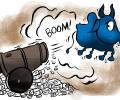
Cash trading volume declined in 2022, even as benchmark indices outperformed their peers. The average daily trading volume (ADTV) for the cash segment fell 18 per cent year-on-year to Rs 61,392 crore (NSE and BSE combined). The ADTV for the futures and options (F&O) segment (NSE and BSE combined) stood at Rs 125 trillion (notional turnover), up 117 per cent from the previous year.

The stocks are largely from sectors such as chemicals, finance and cement, which struggled earlier but the worse seems to be behind them.

Shares of Hyundai Motor India Ltd, the Indian arm of South Korean automaker Hyundai, on Tuesday made a muted market debut and further fell by nearly 6 per cent against the issue price of Rs 1,960. The stock listed at Rs 1,931, reflecting a decline of 1.47 per cent from the issue price on the BSE. Later, the stock made some recovery and hit a high of Rs 1,968.80, up 0.44 per cent.

The Indian markets have delivered high long-term returns, second only to the US.

'The conversation is no longer just about securing funds or acquiring customers but about the long-term value of customers.'

From the 30-share blue-chip pack, Bharti Airtel, Power Grid, Bajaj Finance, Nestle, Mahindra & Mahindra, Reliance Industries, Asian Paints, IndusInd Bank, Hindustan Unilever and HDFC Bank were the biggest gainers. Bajaj Finance climbed nearly 2 per cent after the company reported an 18 per cent increase in its consolidated net profit to Rs 4,308 crore for the December quarter.
From the Sensex pack, Tech Mahindra, HDFC Bank, Larsen & Toubro, ITC, Infosys, IndusInd Bank, Kotak Mahindra Bank, Titan and HCL Technologies were among the gainers. Maruti Suzuki India, Tata Steel, Bajaj Finance, UltraTech Cement, Nestle India, Axis Bank and Tata Consultancy Services (TCS) were among the laggards.

Engineering and construction major Larsen & Toubro (L&T) reported a 25 per cent rise in net profit attributable to the owners of the company for the January-March quarter of 2024-25, owing to higher revenues and an exceptional gain. For the quarter under review, L&T posted a consolidated net profit of Rs 5,497.3 crore, while revenue rose 10.9 per cent year-on-year (Y-o-Y) to Rs 74,392.28 crore.

From the 30-share pack, Adani Port, Bharti Airtel, Asian Paints, IndusInd Bank, Bajaj Finserv, Reliance Industries, Infosys, UltraTech Cement, HDFC Bank, HCL Technologies and ICICI Bank were among the laggards. Tata Motors, Axis Bank, Maruti, Larsen & Toubro, ITC and Tata Steel were among the gainers.
